Showing posts with label interview. Show all posts

Monday, 3 August 2015

Zefyr - Jewellery That's a Breath of Fresh Air


Zefyr: a warm playful breeze from the sea, carrying the scent of spices and far-off lands 

Jewellery can be so many lovely things, a joyous celebration of a special event, a keepsake of a treasured relationship or an expression of your unique take on life. People often put a great deal of thought into choosing a piece of jewellery - yet much of the time we're missing a really important question. Is this jewellery ethical? Has its creation been kind to people and planet? 

Did you know that the average goldmine uses enough water to meet the basic needs of a large city’s population for a whole year? Or that 40% of all reported toxic pollution releases are caused by the mining industry, which is also the second largest contributor to greenhouse gases? 

 
The good news is there are ethical choices out there and you don't have to compromise on aesthetics either! One such option is Sydney-based jewellery label Zefyr. I'm delighted to share with you my recent interview with Founder and Designer Tanya Coelho.
 
Q. You come from a family of craftspeople, but what is it about jewellery in particular that sparks your creativity and passion? 

I think it's the medium itself. I tried working with clay, fabric, wood and glass in the past but we weren't friends. It was metal that stole my heart. I love soldering, beating the metal, shaping it, everything about it except sanding. 

Jewellery in particular appealed because I love the idea of creating beautiful objects that make people feel beautiful just by wearing them. Jewellery also has this amazing totemic ability. We add layers of meaning to our jewellery in a way that other worn objects don't. A particular jewel can connect us to our past, it can remind us of a particular event, and it can connect us to the important people in out lives.

Tanya Coelho - Founder + Design of Zefyr

Q. How would you describe Zefyr’s aesthetic in 10 words or less? 

Exotic, romantic, global and sophisticated.

Q. What makes Zefyr an ethical choice for shoppers? 

All our jewels are created sustainably from recycled silver or brass. They have also been handmade ethically by artisans in Jaipur with fair labour practices. Beauty is really important to me so I have tried to create jewellery that not only looks beautiful and makes you feel beautiful to wear but has also been created beautifully with ethics at its heart. 

Q. If you could change one thing about the global jewellery industry, what would that be and why? 

Oh god, where do I start? For one thing I think we should cut down on the large-scale mining of metal due to the huge environmental implications - the waste, the chemical leeching, the displacement of local communities. We need to recycle more. There's enough metal on the surface for us not to need to mine for the next few decades. 


The other thing I would like to change is the working conditions of the artisans making the cheap jewellery you find in chain stores. Most of the fashion jewellery you buy contains nickel, which is carcinogenic. This means that many of the workers face untold health problems in working everyday with this toxic material. 

Q. Can you tell us a little bit about why you’ve chosen to work with brass as one of your main materials? 

I initially chose brass, as brass is one of the most highly recycled and recyclable metals available. We have now been fortunate enough to discover a source for recycled silver after a long and fruitful search. In the early days of my business this option just didn't exist - or least I wasn't able to discover it. Waste is something I abhor and by creating fashion jewellery in brass I wondered if I wasn't creating more objects that would have a use by date and then be discarded. 

Instead I have decided to focus on creating jewellery that can last a lifetime and perhaps even be passed on to other generations. With silver this is possible and with brass it wasn't.  

Q. Who or what is inspiring you right now? 

The wonderful forts and palaces I visited in Rajasthan and Jaipur earlier this year have filled my head with visions. I'm about to hit the bench to start creating new jewels inspired by the romantic architecture and textures I saw in that corner of India. I'm also really inspired by the beautiful gems I picked up on my travels through Jaipur. I love their colours and I can't wait to start playing with them. 

Q. Your new collection is called Monsoon – what was the inspiration behind these new pieces? 

I was inspired by my travels to the north of Laos. While I was there I was lucky enough to stay with some of the Hmong Hilltribe people. Their geometric and colourful embroidery that they create in their textiles was so beautifully detailed and jewel-like. 

I was inspired to create in metal something that the Hilltribe peoples created in thread.  I was there just as the Monsoon season was starting so got to see the enormity that is this seasonal event.

Click here to see the new Monsoon Collection! You can also connect with Zefyr via Facebook and Twitter

**Stay tuned for my up-coming review of one of Zefyr's gorgeous pieces**


Tuesday, 10 February 2015

Pure Pod - Purely Australian Sustainable Fashion

As much as I love interviewing ethical designers from all around the world - it's always very special when I get to chat to someone based here in Australia! In 2007 designer Kelli Donovan and photographer Sean Watson went out on a limb and launched their own ethical fashion label - Pure Pod


I recently spoke to Kelli about the ups and downs of starting an eco-fashion brand. Theirs is a story of dedication, creativity and determination that I found to be very inspiring...I hope you will too!

Q. Why are sustainability and social ethics an important part of fashion design for you?

We don't believe sustainability and ethics should be a choice as a manufacturer and designer. We think it is an integral part of design. We all need a healthy planet to live and survive so why should it be something we ignore when manufacturing products.  We all have the responsibility to do the right thing as this planet is borrowed from the next generations. If we stuff it up what are they going to do? No powerful organisations, huge amounts of money or large armies are going to bring back a healthy planet are they? 

You can make beautiful things with the right choices and feel good about making them. This story then makes our stockists and customers feel good about what they are purchasing, knowing they are making ethical consumer choices! We have a close relationship with many of our makers, printers, cutters, pattern makers. Many of whom we have been working with for 8 years now and we always want to make sure they are okay and enjoy their work. 


It's a tough trade sitting behind a machine or printing or cutting everyday! If they are working in terrible conditions this would only make it worse on their mental and physical health. I believe this feeling will come out in the clothing and then to the wearer! Fast fashion is great at this!  I just couldn't do it any other way. Why make ethical and sustainable clothing  you are passionate about if the story behind it doesn't match the beautiful eco garments? Just doesn't make sense, so to me there is no choice!!  

Q. How would you describe Pure Pod's aesthetic in 10 words or less?

Life style, passion, nature lover, adventurer, slight touch of vintage, dreamer, compassion, clean cut styles that will last the test of time, a life long story behind it << Hee hee slightly over 10 words ;-) Love the answer though! 

Q. What are some of the challenges you've faced as an eco-friendly fashion brand? How did you overcome them?

A huge challenge is to make in Australia. It is getting harder and harder to survive as a brand. Many of our wonderful crafts people are retiring and there is not a younger generation coming through, plus these people are taking with them amazing skills that younger generations do not know. 

Also being Australian Made doesn't get as much media support as a Fair Trade or offshore made ethical brands. These brands are wonderful but we love our makers and know if we stop giving them work they won't survive and many won't get other work as they are too old in their fields to start another career. 


Cash flow is always a big one for all designers, retailers and suppliers. This one we all have to juggle constantly and often paying ourselves last after everyone has been paid and looked after! Ethical and eco fabric suppliers — it can be very hard somethings finding eco-certified fabrics which are good quality and wear well, wash well and stand the test of time. Sometimes real eco-organic veggie dyed fabrics can be much softer than a hard wearing synthetic fabric. We need to educate our customers that this is the case. 

Q. What's your favourite piece in-store right now (I think mine is your Amazon Dress)?

My current favourite is the veggie and herb dyed, hand block printed, organic cotton Mandala Peplum top. I have both colourways - mud sport and the indigo spot. I can't take them off. The fabric is so soft on your skin and beautiful for hot days. It can be layered for cooler days and looks great with pants or a skirt. We have sold this to many different shaped women and they all look amazing wearing it. Even larger busted customers have loved this top. They were hesitant to put it on but once they did they took it!

The fabric is hand block printed with mineral, veggie and herb dyes. These dyes are virtually at Ayervedic medicine levels, so they are good for your skin and body. As our skin is the largest organ in your body it is smart to put things on it which are pure and organic as much as possible as chemicals from our clothing and skin products can go into our skin.

Q. If you had to choose another profession — what would it be? 

I am also a yoga and Pilates teacher so I think I would go into the health and well-being industry more and learn also to paint or sculpt! I love making people feel relaxed and get in touch with their bodies and mind, and release stresses from their everyday lives. The best feeling is when my students sit up from the Savasana (relaxation) at the end of class and they are all dreamy and relaxed! It's almost like they have gone out of their busy minds and back into their bodies, a grounding feeling! This calms the nervous system and mind!


Q. Who or what is currently inspiring you? 

I love all the amazing artists, crafters and designers we meet in the designer market circles, through different groups I am a part of and just in everyday life! I am not always into following famous people but those who are making a difference in their everyday lives for the better!

Q. What does 2015 hold for Pure Pod? 

This year we have a strong focus on our children's collection - 'dirtgirlworld' organic and ethical kids clothing. We are launching it at Kids In Style in Sydney on 19th February. We are producing the collection for the ABCTV 2 kids show 'dirtgirlworld.' 


We are very passionate about it as we have a little 4 year old girl called Ruby. We want to make families and parents aware of their natural surrounds and to take care of the planet from every purchase to every step! This show teaches kids about the natural world, recycling and just getting outdoors and having fun! Plus it is a fun program with music, colour and learning. Get outside and get grubby! 

You can connect with Pure Pod via Facebook and Twitter - KBC x

Thursday, 11 December 2014

RIYKA is Collaborating for a Sustainable Fashion Future

Rebecca Johnson - designer for London-based women's wear label RIYKA - recently got in touch to share her new project with the Kindness by Design community! This season the team at RIYKA have embarked on a new collaboration with Elizabeth Loopy, a 27-year old woman living in Gambia. 


Very sadly, Elizabeth's father passed away when she was only 13 and soon afterwards she was sent from her home country of Senegal to live with a family friend in Gambia. Despite the many challenges she faced, and with the support of charity GETS, Elizabeth completed her final two years at school, where she was awarded best sewing upon graduation. 

Now Elizabeth is crafting a range of dust bags made from end waste fabric for RIYKA. According to Rebecca, "For every RIYKA purchase made in December over £100 we're including one of Elizabeth's hand-sewn dust bags - for free. Not only does this make the perfect sustainable gift wrap for Christmas, but you will also be helping Elizabeth work towards living in her own flat and achieving financial independence". 


I had the chance to talk to Rebecca about ecochic fashion, her work with Elizabeth and the philosophy behind RIYKA as a fashion label. 

Q. As a designer, why is eco-friendliness important to you? 

Eco friendly/sustainability is a way of life for us, even before we started RIYKA. We try to minimize the effect of our lifestyle on our surroundings. It's a less selfish way of living, and that is the most important thing to us and about being eco. 

Q. How would you describe RIYKA in 10 words or less?

Functional, comfortable, classic, timeless, fun, playful, sustainable, unisex.

Q. If you could change one thing about the current fashion industry, what would it be?

Make it less fast, more transparent, the big companies have so much power to do this, and I am constantly shocked by how this power isn't utilized in a more positive way. They have the power to change the way we all consume, but hopefully things are starting to change...

Q. Can you tell me about RIYKA's collaboration with Elizabeth Loopy in Gambia and how it began?

I was contacted through another designer friend who thought that I might be interested in working with her. We started the project about 6 months ago, the idea is to start with something small, and see how we get on, and hopefully grow the range and give Elizabeth more complex pieces. At the moment she is sewing it all on a manual singer machine, but the ideal would be to set her up with a proper machine. These are all baby steps at the moment, but we love the challenge and I love the idea that we can connect with people in different parts of the world, and help them somehow.


Q. Who or what is inspiring you right now? 

People who are encouraging and promoting for a more sustainable fashion industry- like Lucy Siegel, Livia Firth and and Carry Somers.

I'm loving RIYKA's Flourance shirt made out of light organic crossweave blue chambray, with reclaimed denim panels on the sleeve :-)

 
You can also connect with RIYKA via Facebook, Pinterest and Twitter

Wednesday, 1 October 2014

Jacob & Esau - A Creative Adventure in Fair Fashion

In the sometimes inwards-looking and selfishly motivated world of fashion, there are still those that are choosing to take a stand for better things. Two young women based in Melbourne have joined forces to start a new label called Jacob & Esau - with a deliberate focus on the makers of their clothing. I recently spoke to co-founders Joanne and Esther about their new adventure in ethical design!


Q. Where did the name Jacob & Esau come from?
 

J: This is an interesting one! Right before Esther & I even mentioned the idea of starting our own fashion label to each other, Esther always had this name in mind. She thought it was pretty cool to draw inspiration from the biblical siblings in the creative direction of her designs. Jacob for simple, everyday basics and Esau for the occasional wild pieces! So when the time came to decide on a name for our label, she suggested Jacob & Esau and explained the creative underpinnings of this name. I thought it was a fantastic idea and then only realised it also stood for the initials of our very own names! J & E, Joanne & Esther… there you go!

Esther and Joanne

Q. How would you describe Jacob & Esau in 10 words or less?

E: Easy peasy – “Clothing for the people”
 

Q. Why is fairness and transparency important to you both personally and professionally?

J: Honest and genuine relationships have become sort of a rare breed. It is much easier to do things which serves one’s self at the expense of another person and has probably become the norm in our culture these days; like the popular saying, “look after number one”. I take it as a personal challenge to dare to be a little different, both in the workplace and beyond! 


In the last few years, it has become increasingly obvious to me the need to maintain this stand for fair and honest interactions, be it in everyday choices, my own relationships and business decisions. The J & E initiative was born out of a collective desire to see an option for everyday people to choose clothes which are made fairly by people who are treated respectfully.


Q. What kind of aesthetic will your clothing have?

E: J & E garments are wardrobe staples, think of your favourite white tee, casual men's shorts or a throw-on summer dress in a cute print! Of course we are all influenced by trends to a certain degree, but J & E takes special care to design styles that can be worn for years to come and can be mixed and matched with an existing wardrobe, adding value to the life of the garment.


We are aware of the stigma that is associated with 'ethical or sustainable fashion' and are keen to provide the opposite! In essence, our clothes should look like 'normal' clothes, but upon further inspection a real story evolves, revealing the backbone of our label and it's ethical business decisions.


Q. What made you choose Bali in Indonesia as your manufacturing hub and who are your makers? 

J & E: Garment makers Kholil and Wiwik, a husband and wife team, will be producing our first collection! They work from home and are building up their own home business, enabling them to raise their young son, Dafar, in comfort and convenience, as well as earn a living. 

As you said, they are based in Bali, Indonesia, and we chose this location due to some contacts we had while researching into our business, which have led to strong relationships and really positive outcomes so far! 

Kholil, Wiwik and Dafar

It’s a bonus that Indonesia is a neighboring country for us (being based in Melbourne, Australia), so travel is shorter for this initial stage of launching our business and we’re able to learn the ropes quicker! Another important factor is that many Australians are familiar with Bali as a holiday destination so they can relate well to the culture and also the impact we are trying to make!


Q. Who or what is inspiring you both right now?

J: A great desire to see our vision of J & E becoming reality! Just the thought of being able to see, touch and wear clothes that were once paper designs, and knowing that there is a pretty cool story behind how it all started, is something which keeps me going!

E: People! People always inspire me, whether it’s like-minded creatives who are reaching for the stars, or people like Kholil and Wiwik, who (like many parents!) have the perseverance and the selflessness to work day in and day out to provide for their family. The desire to see J & E make a positive difference to people all around the world is what really gets me going!

Q. Can you tell us how to get involved in your Pozible campaign and why this would be awesome?


J & E: This is super easy! Just head over to Pozible and click the huge “PLEDGE” button if you wish to contribute an amount. This amount goes to the funds needed to produce our first collection. 


Another way to get involve is to share this initiative with all your friends & family. Be it via email, Facebook, Instagram or Twitter…we are keen to have more people on board the J & E train! Your time and effort in choosing to partner with us would be so awesome as YOU would be A HUGE PART in enabling the first J & E collection come to life! Thank you in advance!


You can also connect with Jacob & Esau via Facebook, Twitter, Instagram and Pinterest

Friday, 14 March 2014

Project Karchob is Bringing Artisans into the Spotlight!

"India’s rural artisans and craftspeople are among the country’s greatest creative and cultural resources and are a vital part of the Indian economy. Yet despite their substantial contributions, rural artisans and craftspeople have been largely left out of India’s explosive economic growth and remain among the poorest groups in the country" - Artisans of Fashion

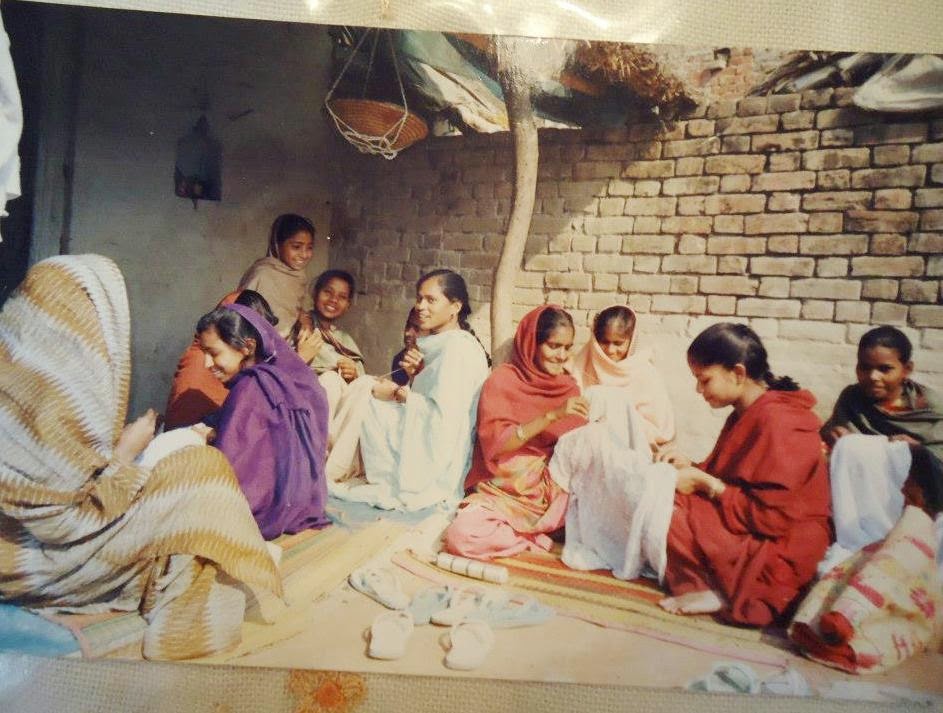
It's with great pleasure that I introduce you to a young woman who is determined to shine a light on both the talent and the life stories of artisans living in Uttar Pradesh, India. Aafreen Hasnain has hit the ground running since graduating from University only last year, starting Project Karchob in order to promote the skills and work of the artisans of Uttar Pradesh through the non profit organization Jyoti Welfare Association based in Lucknow.

   
According to her research more than 60% of the artisans are women, less than 10% of whom are educated beyond Grade 5 and due to a strict Caste System, a section of these women are given a lower wage than the others. Aafreen and her colleagues have made a conscious decision to create significant positive change within this artisan community!

I spoke to Aafreen recently about her work, inspirations and the future of fair trade in India. 


Q. What inspired you to work with artisans based in Uttar Pradesh and to create Project Karchob? 

I have grown up seeing my Mother work with artisans; I have been observing and learning from her since my childhood.

I started Project Karchob as I had strong faith in the work being done by the community and that their designs can be used on products beyond Indian clothing, which would suit a wider audience thus helping the society by getting more customers and promoting the art of hand embroidery.  

Q. Where does the name ‘Karchob’ come from?

A 'Karchob' is a framework for making raised zari metallic thread embroidery, used by thousands of artisans to make beautiful hand embroidery. Our society is famous for it’s niche metallic thread work.


Q. How would you describe Project Karchob in 10 words or less?

Faith in hand work creates fair trade and innovative sustainable fashion

Q. Why do you think women are playing such an important role in fair trade projects around the world?

For India I can say the reason is because women were usually the ones who did not go out to work and hence they engaged in work they could do at home. Learning hand embroidery worked for most of them as they could sit at home and work while their kids and husband go to school and the office respectively. Even now, it is mostly the rural women who engage in hand embroidery as an income generating skill. 


As for the women doing fair trade projects, I would say it is compassion and an enthusiasm for working for the much earned credit and praise that the artisans deserve which is worth fighting for.

Q. What are some of the challenges you’ve faced while working on Project Karchob?

1. Lack of a brand value: People usually do not buy from a brand they do not know of and which does not have a strong online presence. The society, Jyoti Welfare Association is a small society and does not have a website with a payment gateway.

2. Designers: The society has very fine hand embroidery artisans and niche design techniques but we do not have designers who can make clothing for a western market or to make products beyond apparel. Hence we are looking for designers who want to use our skills and work with us in the field or remotely to make some beautiful embroidery pieces.


Q. Where can people purchase the items crafted by the project’s artisans?

People can visit our store in New Delhi, India to purchase readymade products or order customised products.

Currently we do not have an online store with a payment gateway, however we do have a Facebook page where people can view the products and send a message for the item they are interested in. 


Most importantly people who like our work can contact me directly at Aafreen.h@gmail.com and I will be very happy to discuss our catalogue and assist in customized design for their products.

Q. Who or what is inspiring you right now?

I am inspired by lots of people working in the fair trade fashion sector but most of all I am inspired by the people I work with in the field i.e. the artisans themselves and the designers who work with us out of their comfort zone to continuously improve their designs on modern clothing and accessories.


Q. What does the future hold for Project Karchob?

Well, a lot of hard work for sure! I hope that through Project Karchob we are able to provide permanent employment to the artisans, as of now we have only work-based employment. 

You can follow Aafreen and Project Karchob on Facebook and Twitter!